
Mixed SKU Carton Labels: China Consolidation Checklist
Plan mixed SKU carton labels for China consolidation with clear carton IDs, quantity records and version control so receiving teams can reconcile deliveries.
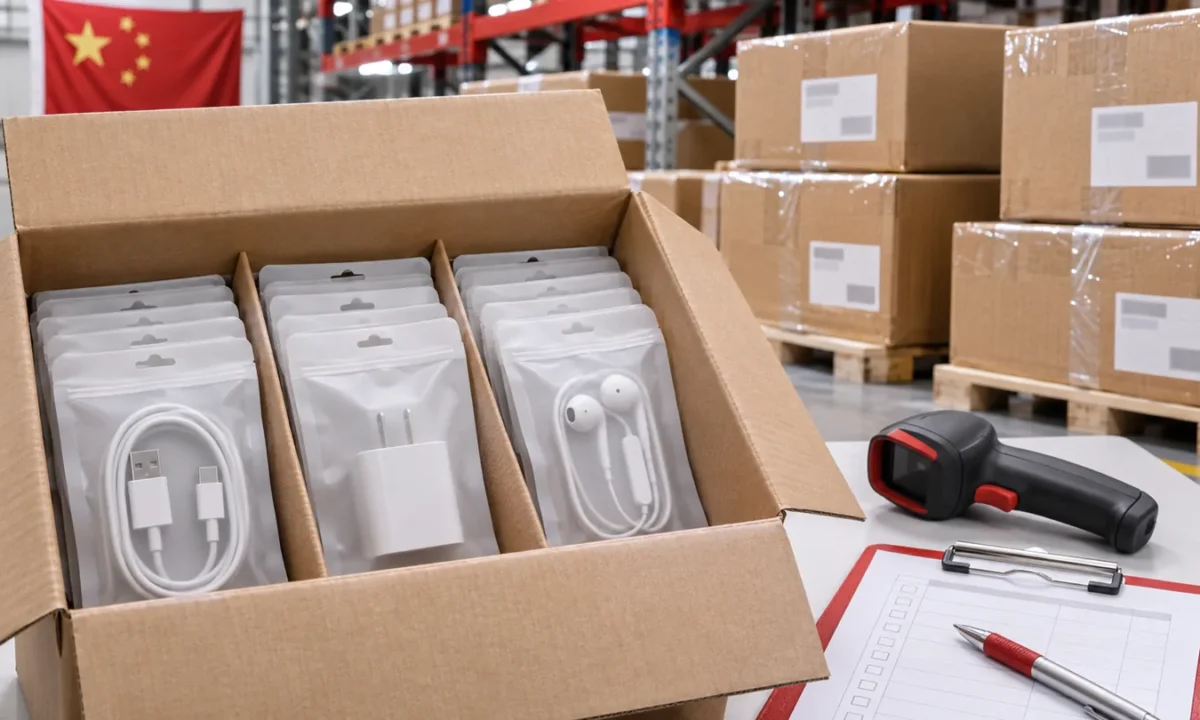
Quick summary: Mixed SKU carton labels identify the outer handling unit, while a carton-level record explains the products inside it. Use a unique carton identifier and a controlled contents list so repacking does not break the connection between the label and the goods.
1. Why mixed cartons need a deliberate identification plan
Combining small quantities can create a practical shipping unit, but a label that simply says “accessories” gives the receiving team little help. When several variants share one carton, shortages and substitutions are harder to investigate without a clear contents record.
Trade.gov describes a packing list as an itemization of package contents. For China consolidation, the operational lesson is to keep outer-carton identification connected to that package record. Destination, carrier and retailer rules must still be checked for the particular shipment.
2. Building mixed SKU carton labels and records
2.1 Agree the receiving requirements first
Ask the destination warehouse whether mixed cartons are permitted and what identifiers it needs. Confirm whether the receiver expects SKU quantities on the carton, on a separate packing list, or in an electronic advance notice. Do not substitute a generic warehouse label for a required channel-specific shipping label.
Choose a naming convention with a shipment reference and a unique carton number. Keep it stable through picking and packing, but issue a replacement record when the physical package changes.
2.2 Link every carton to its contents
| Record field | Purpose |
|---|---|
| Shipment and carton ID | Distinguishes one handling unit |
| SKU and variant | Identifies each sellable product |
| Quantity and unit | Separates pieces, sets and inner packs |
| Supplier or receiving reference | Preserves inbound traceability |
| Final dimensions and gross weight | Supports shipment planning |
| Revision and release date | Identifies the current record |
Keep the product description understandable to a person who has never seen the factory order. If a set contains several components, define whether the quantity means components or finished sets. That distinction affects both warehouse counting and the buyer's receiving reconciliation.
2.3 Check the sealed package
Complete the contents record after inspection and repacking. Compare the carton ID on the physical package with the released packing list. Remove or cover obsolete operational labels where appropriate, while preserving mandatory product or transport information.
Photographs can show the label position and packing arrangement, but photographs do not replace counting or a readable item record. Agree which checks are sampled and which must be completed for every carton.
3. Common errors after repacking
Splitting a carton without revising its record creates two physical packages with one identity. Combining cartons without removing obsolete identifiers creates the opposite problem. Both make receiving exceptions harder to resolve.
Use a change log that records the original carton, replacement carton identifiers, affected quantities and approving person. Keep held goods out of the final dispatch totals. Treat any example label in a planning document as a draft until the receiver has approved its required fields.
Review Oushine consolidation support, the goods receiving checklist and packaging and labeling services when preparing factory instructions.
4. Frequently asked questions
Can several SKUs share one carton?
Potentially, if the destination and agreed packing instructions permit it. Confirm the receiving rules before combining products.
Should the outer label show every product detail?
Use the receiver's required format. A compact outer identifier can link to a detailed packing list, but the receiver may require additional information directly on the package.
What happens when a carton is reopened?
Reconcile the contents and update the record if anything changes. Release the current label and packing-list revision together.
5. Conclusion and action recommendation
Mixed SKU carton labels work when one identifier reliably connects the sealed package to its actual contents. Send Oushine your SKU list, receiving requirements and destination through the quotation form to define a written consolidation and labeling scope.
Sources
- International Trade Administration, Packing List: https://www.trade.gov/packing-list