

Carton Remeasurement Before Shipping from China Guide
Use carton remeasurement before China dispatch to reconcile packed dimensions, gross weight and quote assumptions, with a practical approval checklist.
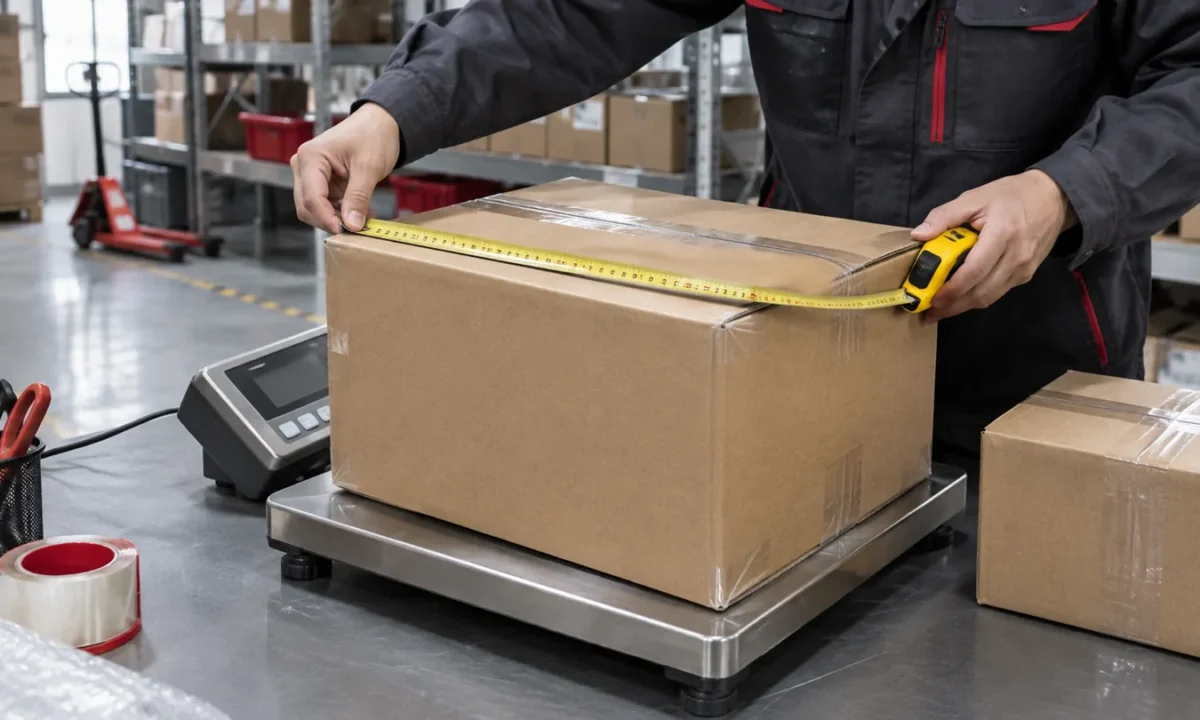
Quick summary: Carton remeasurement means checking the outside dimensions and gross weight of the finished shipping packages before dispatch. Compare those measurements with the quotation assumptions, then approve any revised packing or transport scope before release.
1. Why a supplier's carton estimate can stop being reliable
A supplier quotes a carton size before production finishes. The warehouse later adds corner protection, changes the outer box or combines products from another factory. The goods are the same, but the shipping package is not. Reusing the original dimensions can leave the freight estimate disconnected from the cartons handed to the carrier.
Carton remeasurement is especially useful for importers, ecommerce brands and wholesalers consolidating supplier deliveries. It is a final data-control step, not a promise of lower freight charges. A smaller box is not an improvement if the product loses necessary protection or the destination cannot accept the packing configuration.
2. Build a carton remeasurement record before release
2.1 Measure the package that will actually travel
Complete approved repacking first. Identify each carton or group of genuinely identical cartons, record the outside length, width and height, and weigh the closed package including its contents and packing materials. Specify centimeters and kilograms rather than sending unlabeled figures. If palletization is part of the booked configuration, ask which pallet-level measurements and weights the transport provider requires.
Keep a photograph showing the package identity and measurement where practical. Record the measurement date, packing version and person responsible. Investigate visibly different cartons rather than copying one measurement across the whole shipment.
| Record field | What to capture | Why it matters |
|---|---|---|
| Carton ID or identical group | Unique reference and number of cartons | Connects measurements to the physical shipment |
| Final outer dimensions | Length, width, height and units | Replaces provisional supplier data |
| Gross weight | Packed weight and units | Separates product weight from shipping weight |
| Packing version | Box, protection and pallet changes | Explains why measurements changed |
| Quotation basis | Service, divisor and rounding rule if applicable | Makes the comparison reproducible |
| Approval | Revised cost, decision owner and release instruction | Prevents an unapproved booking change |
2.2 Compare like-for-like chargeable-weight assumptions
DHL Express's published Netherlands FAQ describes comparing actual and volumetric weight, using the higher figure, and gives length × width × height divided by 5,000 for its express calculation. This is a carrier-specific example, not a universal formula for China air freight, sea freight or every DDP route. Ask the selected provider to confirm the applicable units, divisor, rounding, minimums and treatment of multiple packages.
For illustration only, a 50 × 40 × 30 cm carton has a calculated volumetric weight of 12 kg using a divisor of 5,000. At 50 × 40 × 40 cm, the result becomes 16 kg. If actual gross weight remains 10 kg, the volume-based figure is larger in both cases. This arithmetic example excludes rounding and other charges; it is not an Oushine rate or a customer case.
3. Resolve measurement differences without weakening packaging
Start with the question: what changed? Separate a measurement error from a deliberate packing change. A missing unit, a different carton type and added protective material require different responses. Do not remove protection or compress products simply to recover a previous estimate.
Ask for two written options where appropriate: retain the current protective configuration, or approve a revised packing method with new dimensions and handling costs. Compare total quoted cost and product protection, not only nominal kilograms. Carrier remeasurement may still affect the final billing under the applicable contract.
Use the broader China shipping quotation checklist for product and destination data. Connect approved changes to repackaging and labeling instructions. Review the actual service scope through air and sea DDP shipping assessment; DDP eligibility remains subject to product, destination, customs and route review.
4. Frequently asked questions
Is the supplier's product weight enough for a shipping quote?
A: No. Provide packed gross weight and final outside dimensions, along with carton count and the other information requested for the selected service. Net product weight excludes packaging.
Does a smaller carton always reduce the freight bill?
A: No. Actual weight, service minimums, rounding, handling charges and other quoted conditions can affect the result. Confirm the total revised quotation and preserve suitable product protection.
5. Conclusion and next action
Carton remeasurement connects the final physical shipment to the approved freight assumptions. Send Oushine the product details, carton-level weights and dimensions, packing requirements and destination to request a written preparation and shipping scope. Repacking labor, materials and transport are assessed within that scope rather than assumed to be universally included.
Sources and boundaries — reviewed November 26, 2026: The record template and approval workflow are recommended operating practices. The formula example is limited to the carrier guidance cited below, not a general sea-freight or DDP tariff rule.