

Air Freight vs Sea Freight From China: Cost, Speed and Cargo Fit
Air freight is normally chosen when time and inventory availability matter more than transport cost; sea freight is normally chosen when the shipment can support a longer planning cycle and the volume makes ocean transport practical. The correct comparison uses packed cargo data, total route stages, customs responsibilities and the cost of delay — not a universal price-per-kilogram or transit-time promise.
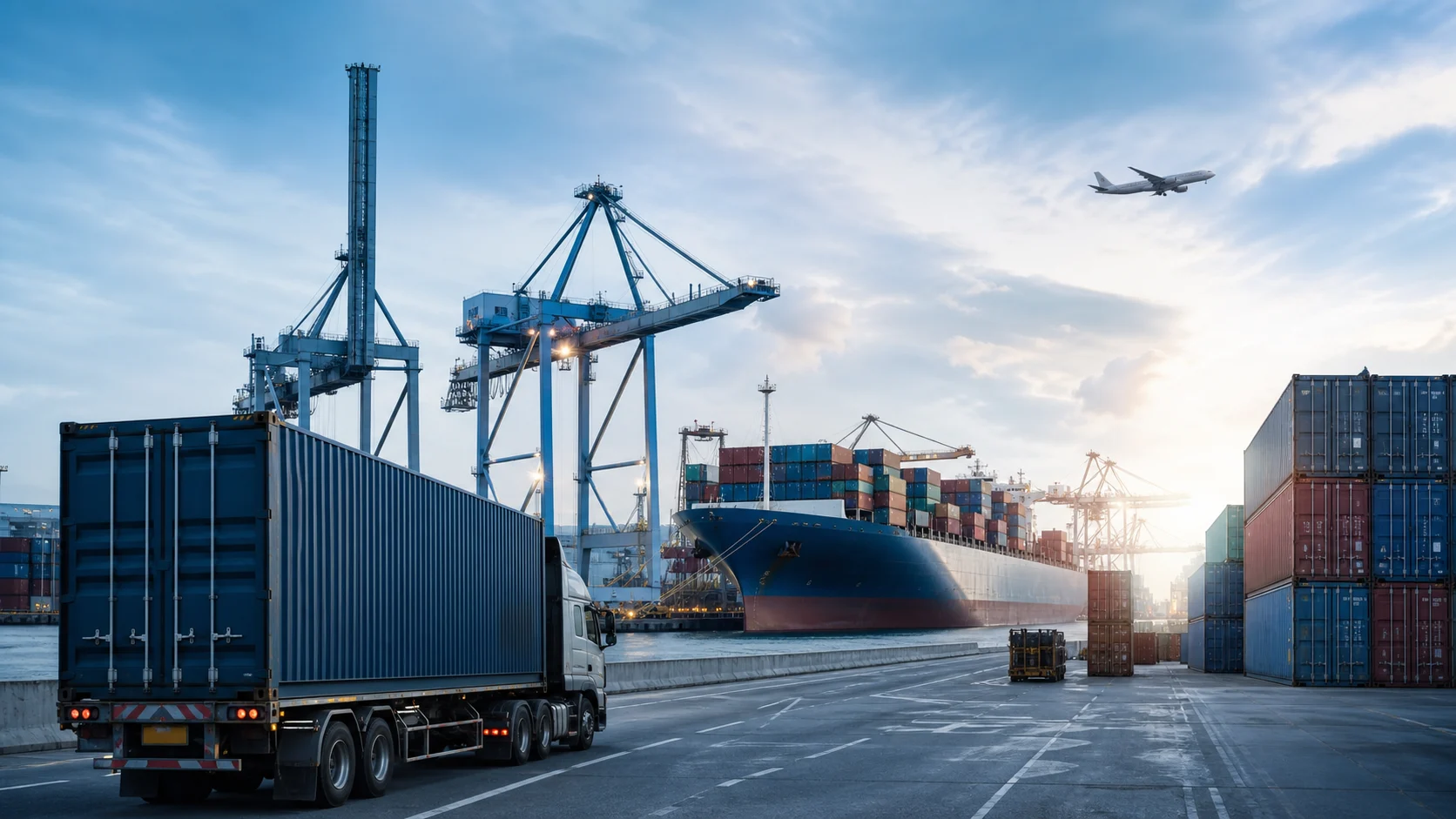
Article summary: Air freight is normally chosen when time and inventory availability matter more than transport cost; sea freight is normally chosen when the shipment can support a longer planning cycle and the volume makes ocean transport practical. The correct comparison uses packed cargo data, total route stages, customs responsibilities and the cost of delay — not a universal price-per-kilogram or transit-time promise.
1. The Short Answer: Choose the Mode Around the Business Constraint
Use air freight when the cargo is urgent, compact enough for acceptable chargeable weight, high value relative to transport cost or needed to protect a launch or stock position. Use sea freight when the cargo is larger, heavier, less urgent and can move through an ocean schedule with enough inventory buffer.
People searching for air freight vs sea freight from China usually have commercial-investigation intent. They want to decide which quote to request or why two quotations differ.
| Decision factor | Air freight tends to fit | Sea freight tends to fit |
|---|---|---|
| Time sensitivity | Launch, replenishment, samples, shortage recovery | Planned replenishment and stable demand |
| Cargo profile | Compact, higher-value goods | Bulky or heavy commercial quantities |
| Shipment frequency | Smaller, more frequent lots | Larger, less frequent lots |
| Cash/inventory effect | Less time in transit, higher transport cost | More time in transit, lower cost potential at scale |
| Capacity/schedule exposure | Flight space and security restrictions | Sailing schedules, port handling and container availability |
| Packaging priority | Dimensional efficiency and air-handling robustness | Moisture, stacking, container movement and longer route exposure |
“Tends to fit” is not a price promise. Live capacity, origin, destination, season, product and service level can reverse an assumed result.
2. Compare the Same Door-to-Door Scope
2.1 Map Every Stage
A fair comparison uses the same origin and final destination:
- Supplier or warehouse pickup
- Export packing and documentation
- Origin handling and export clearance
- Main air or ocean transport
- Destination terminal handling
- Import clearance, duties and taxes
- Final delivery
An airport-to-airport rate and a door-to-door sea quote are not comparable. Ask each provider to name included and excluded stages, the Incoterm, chargeable basis and destination exceptions.
The ICC Incoterms 2020 rules allocate delivery tasks, costs and risk between seller and buyer. They do not determine freight price, product compliance, title transfer or every customs responsibility.
2.2 Understand Chargeable Weight for Air
Air carriers can charge by actual or volumetric weight. IATA's air cargo tariffs and rules guidance explains that the charge may be based on dimensional weight or actual weight.
The applicable divisor and rounding method depend on the carrier and service. Therefore, request a quote from final packed:
- Number of cartons
- Length, width and height of each carton type
- Gross weight of each carton type
- Product description
- Stackability and pallet status
Large lightweight cartons can cost more than their scale weight suggests. Repackaging may reduce chargeable weight, but it must not weaken product protection.
2.3 Understand the Sea-Freight Basis
Sea cargo may move as less-than-container-load (LCL) or full-container-load (FCL). An LCL quote can include origin consolidation and destination deconsolidation charges; an FCL quote can include container pickup, loading, terminal and equipment-related charges.
For packed containers, the International Maritime Organization explains that verified gross mass is required before loading under SOLAS. Accurate cargo weights are therefore an operational and safety requirement, not only a quotation input.
2.4 Compare Total Landed and Delay Cost
Use a scenario table rather than one rate:
| Cost or impact | Air scenario | Sea scenario |
|---|---|---|
| Origin pickup/handling | ||
| Main freight | ||
| Destination charges | ||
| Clearance/duties/taxes | ||
| Final delivery | ||
| Packaging/palletization | ||
| Insurance decision | ||
| Inventory financing during transit | ||
| Expected stockout or delay consequence |
The lowest freight invoice may not be the lowest business cost if a stockout stops sales or a rushed shipment forces repeated air replenishment.
3. Cargo Fit, Risk and Planning
3.1 Product and Regulatory Restrictions
Batteries, magnets, liquids, powders, aerosols, chemicals, temperature-sensitive goods and other restricted cargo require accurate declarations and may need tests, packaging or carrier approval. Do not describe restricted cargo as general goods to obtain a cheaper quote.
Ask the provider which documents and acceptance conditions apply. The destination importer remains responsible for compliance under its jurisdiction. For U.S. imports, CBP states that the importer remains ultimately responsible even when using a licensed broker in its broker guidance.
3.2 Packaging Differences
Air freight packaging should resist repeated handling while controlling dimensional volume. Sea freight packaging must also consider longer exposure, container humidity, stacking pressure and cargo movement.
Confirm:
- Unit protection
- Master-carton strength and closure
- Pallet material and destination restrictions
- Waterproof/moisture protection where needed
- Void fill and load restraint
- Handling marks supplied by the buyer
- Whether cartons can be stacked
3.3 Use a Split-Mode Strategy When Appropriate
Air versus sea is not always an all-or-nothing decision. A buyer may send a small urgent quantity by air and the balance by sea. The split should be planned at SKU level so both shipments have correct labels, documents, inventory records and supplier allocations.
Split-mode questions:
- Which SKUs prevent a stockout or launch delay?
- What minimum air quantity protects the critical period?
- Can the supplier pack air and sea cartons separately?
- Are two sets of documents and labels required?
- Does the remaining sea quantity still suit LCL or FCL?
3.4 Common Comparison Mistakes
- Requesting prices before final packaging exists.
- Comparing air chargeable weight with sea actual weight without the full rate structure.
- Ignoring origin and destination terminal charges.
- Assuming DDP means every possible examination, storage or exception is included.
- Using the supplier's factory-ready date as the delivery date.
- Quoting “transit time” without defining pickup, departure, arrival, clearance and final delivery.
- Failing to disclose batteries or other special cargo.
4. Information Needed for Accurate Quotes
Send the same data to both providers:
- Product description and HS code if confirmed by a qualified party
- Quantity and commercial value
- Carton count, dimensions and gross weight
- Pickup city/address and cargo-ready date
- Destination address/postcode
- Desired Incoterm and importer-of-record plan
- Air, sea, LCL/FCL or comparison request
- Battery, liquid, magnet, powder, wood or regulated-cargo details
- Stackability and pallet requirements
- Delivery deadline and reason
Mark estimates clearly. Request a re-quote when final packed data changes.
5. Frequently Asked Questions
Q1: Is air freight always faster than sea freight from China?
A: The main transport is normally faster by air, but total delivery also includes pickup, booking, handling, customs and final delivery. Compare door-to-door milestones for the actual route.
Q2: Is sea freight always cheaper?
A: Not for every shipment. Small LCL shipments can carry minimum, consolidation and destination charges. Compare the complete route cost from final packed data.
Q3: Why does carton size matter so much for air freight?
A: Air carriers may charge the greater of actual and volumetric weight. Large lightweight packaging can therefore raise chargeable weight even when scale weight is low.
Q4: Can I use air and sea freight for the same order?
A: Yes. A planned split can protect urgent inventory while sending the balance economically. Separate SKU quantities, packing lists, labels, documents and tracking for each shipment.
6. Conclusion and Oushine Next Step
Choose air or sea freight after defining the business constraint and comparing the same door-to-door scope. Final cartons, cargo characteristics and destination responsibilities are the foundation of a reliable quote.
Send Oushine supplier locations, product description, carton data, value, cargo-ready date, destination, special-cargo details and delivery target. Oushine can compare air and sea DDP options under a written scope showing assumptions, included stages and exceptions.
Sources and Methodology
- IATA: Air Cargo Tariffs and Rules — actual and volumetric weight context
- ICC Incoterms 2020 — official delivery-term resources
- IMO: Safe Transport of Containers — SOLAS verified gross mass context
- U.S. CBP: Do I Need a Customs Broker? — importer responsibility for U.S. destinations
Editorial note: Freight rates, schedules, restrictions and customs requirements change. Obtain a live route-specific quotation and destination advice. Last reviewed: 5 August 2026.