

DDP vs DAP Shipping from China: Duties, Risks and Responsibilities
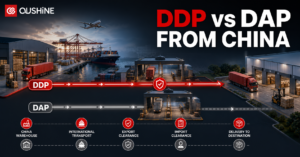
DDP and DAP both place transport risk on the seller up to a named destination, ready for unloading. The critical difference is import clearance: under DAP the buyer handles and pays for import formalities, while under DDP the seller assumes that obligation. This guide explains the practical decision, cost questions and contractual gaps importers must resolve before shipment.

Article summary: DDP and DAP both place transport risk on the seller up to a named destination, ready for unloading. The critical difference is import clearance: under DAP the buyer handles and pays for import formalities, while under DDP the seller assumes that obligation. This guide explains the practical decision, cost questions and contractual gaps importers must resolve before shipment.
1. Why DDP vs DAP Is More Than a Freight-Price Choice
A quotation marked “door to door” does not tell you who will act as importer, pay duties, respond to customs questions or absorb clearance delays. DDP and DAP are Incoterms® rules that allocate specific delivery costs, tasks and risks between seller and buyer. They are not marketing labels.
The International Chamber of Commerce (ICC) defines the current rules. Under DAP, the seller delivers when the goods are placed at the buyer’s disposal at the named destination, on the arriving means of transport and ready for unloading. Under DDP, delivery occurs in the same condition, but the goods are also cleared for import and the seller handles import formalities and duties. The ICC’s official DAP versus DDP explanation confirms that import clearance is the central distinction.
| Planning signal | Practical interpretation |
|---|---|
| Search intent | Commercial investigation with immediate shipping intent |
| Primary audience | Importers, ecommerce brands and wholesalers arranging delivery from China |
| Main pain point | “All-inclusive” quotations that do not identify the importer or destination exceptions |
| Decision required | Whether seller or buyer can legally and operationally handle import clearance |
Always write the rule, exact named place and version, for example:
DAP [full warehouse address], Incoterms® 2020
or
DDP [full warehouse address], Incoterms® 2020
The named place matters because the seller’s cost and risk continue to that delivery point.
2. DDP and DAP Responsibilities Explained
2.1 DAP: Delivered at Place
Under DAP, the seller generally:
- Packages the goods as required for transport.
- Handles export clearance.
- Contracts and pays for carriage to the named destination.
- Bears loss or damage risk until the goods are placed at the buyer’s disposal at that point, ready for unloading.
- Provides the agreed transport and commercial documents.
The buyer generally:
- Handles import customs formalities.
- Acts as or appoints the appropriate importer of record.
- Pays import duty, taxes and import-clearance costs.
- Provides information or authorization needed for clearance.
- Unloads the arriving vehicle, unless the separate carriage contract clearly includes unloading.
DAP can provide seller-controlled door transportation while preserving a local, transparent import process for the buyer.
2.2 DDP: Delivered Duty Paid
Under DDP, the seller accepts the broadest delivery obligation in the Incoterms® rules. In addition to export and carriage responsibilities, the seller must handle import clearance and pay applicable import duties and taxes required by the rule.
The buyer normally takes delivery and unloads at the named destination. Risk transfers when the cleared goods are placed at the buyer’s disposal on the arriving vehicle, ready for unloading.
DDP is attractive to buyers who want one delivered price, but it is only workable when the seller and its service structure can lawfully complete import formalities in the destination country. ICC guidance warns that some jurisdictions restrict or prevent a foreign seller from performing import clearance; in those cases, DAP may be more appropriate. See the ICC’s official comparison and regulatory caution.
2.3 Side-by-Side Responsibility Table
| Responsibility | DAP Incoterms® 2020 | DDP Incoterms® 2020 |
|---|---|---|
| Export clearance | Seller | Seller |
| Main carriage | Seller | Seller |
| Risk during carriage to named place | Seller | Seller |
| Import clearance | Buyer | Seller |
| Import duty/tax under the rule | Buyer | Seller |
| Import licenses/registrations | Buyer-side obligation | Seller obligation, if legally possible |
| Delivery condition | At named place, ready for unloading | Import-cleared at named place, ready for unloading |
| Unloading at destination | Buyer, unless separately included | Buyer, unless separately included |
| Exact named place required | Yes | Yes |
2.4 What Incoterms Do Not Decide
DDP or DAP alone does not determine:
- Ownership or title transfer
- Payment timing
- Product specification or warranty
- Governing law and dispute resolution
- Intellectual-property ownership
- Customs valuation correctness
- Product compliance or marketplace acceptance
- Mandatory insurance coverage
- Remedies for delay beyond the delivery obligations
Put these items in the sales contract. Do not expect a three-letter term to replace a complete agreement.
3. How to Choose DDP or DAP from China
3.1 Choose DAP When the Buyer Controls Importation
DAP is often the clearer option when the buyer:
- Has a registered importing entity.
- Uses its own customs broker.
- Wants duty and tax visibility.
- Holds required licenses or permits.
- Needs to maintain its own import records.
- Can manage customs questions and destination compliance.
For a regular importer, buyer-controlled clearance can make the customs trail easier to audit and reduce uncertainty about who declared the goods.
3.2 Choose DDP Only After Verifying the Import Structure
Before accepting DDP, obtain written answers:
- Who will be the importer of record?
- Under whose customs or tax registration will entry occur?
- Which broker will file the entry?
- Are duty and import taxes included?
- What tariff classification and customs value assumptions were used?
- Who responds to document or product-compliance requests?
- Are examinations, storage, demurrage or address-correction charges included?
- What happens if the destination authority rejects the proposed importer arrangement?
- Does the quotation include final delivery appointment and unloading?
A freight provider saying “tax included” is not a substitute for a lawful importer and accurate customs declaration.
3.3 Compare a Landed-Cost Schedule
| Cost item | DAP quote | DDP quote |
|---|---|---|
| China pickup and export handling | Confirm | Confirm |
| Main air/sea/rail transport | Confirm | Confirm |
| Destination terminal/handling | Confirm inclusion | Confirm inclusion |
| Customs brokerage | Buyer cost | Seller cost under DDP scope |
| Duty and tax | Buyer cost | Seller cost under DDP scope |
| Bond/security/advancement fees | Buyer or broker | Confirm seller inclusion |
| Examination/storage | Define exception | Define exception |
| Final delivery | Confirm named address | Confirm named address |
| Appointment/liftgate/unloading | Confirm separately | Confirm separately |
Use the same cargo data, destination and service level. A low DDP price based on an unsupported tariff code or customs value is not a reliable saving.
3.4 Understand Risk Transfer and Insurance
Both are “D” terms: the seller bears transport risk until delivery at the named destination. Neither DAP nor DDP automatically creates the same insurance obligation found under certain other Incoterms® rules. The party carrying the risk should decide whether the insurance arrangement and claim process are adequate.
Ask:
- Is cargo insurance included or merely carrier liability?
- What value and risks are covered?
- Who is the policyholder and claims contact?
- What documents and notice period apply?
Do not describe a shipment as “fully insured” without a policy or certificate supporting the claim.
3.5 Common DDP/DAP Mistakes
Writing only a city or country. Name the exact terminal, warehouse or address and, where useful, the delivery point within it.
Assuming DDP includes unloading. Under both DAP and DDP, delivery is normally ready for unloading; clarify liftgate, labor and unloading costs.
Using DDP where the seller cannot import. Validate destination registration and importer rules before shipment.
Hiding customs assumptions. Require product descriptions, values and tariff assumptions that match the commercial documents.
Confusing freight payer with risk holder. Incoterms allocate risk at a defined delivery point; the party paying a carrier is not the only consideration.
Forgetting exceptional charges. Customs examinations, storage, demurrage, port congestion and failed-delivery charges need written treatment.
3.6 Practical Example
A U.S. ecommerce brand orders consolidated inventory from three Chinese suppliers. Under DAP to its warehouse, Oushine can coordinate China receiving, export handling and delivery transport, while the buyer’s appointed U.S. broker clears the shipment and bills the buyer for duty and tax.
Under a proposed DDP structure, the service provider must first confirm a lawful importer arrangement, tariff and value assumptions, included duties/taxes, broker responsibility and destination delivery scope. If that structure cannot be documented, changing the label from DAP to DDP does not transfer the operational reality.
3.7 SEO and Internal-Link Plan
Use this article as the canonical comparison for DDP vs DAP shipping from China. Existing DDP route pages should target specific modes or destinations and link here rather than repeat the same Incoterms explanation. Add internal links to the shipping-quotation, consolidation and purchasing-agent guides.
4. Frequently Asked Questions
Q1: What is the main difference between DDP and DAP?
A: Import clearance. Under DAP, the buyer handles and pays for import formalities. Under DDP, the seller handles import clearance and the applicable duty/tax obligations allocated by the rule.
Q2: Who pays import duty under DAP shipping from China?
A: The buyer. The buyer is responsible for import clearance, duty, taxes and related import formalities under DAP.
Q3: Does DDP include unloading at my warehouse?
A: Not automatically. Under DDP, the seller delivers the import-cleared goods on the arriving vehicle ready for unloading. The buyer normally handles unloading unless the contract of carriage or sales agreement expressly includes it.
Q4: Is DDP always better for a first-time importer?
A: No. It can simplify pricing, but only when the seller has a lawful and transparent import arrangement. The buyer should verify the importer, broker, tariff/value assumptions, duties, taxes and exclusions before accepting DDP.
5. Conclusion and Next Step
Choose DAP when the buyer has a reliable local import process and wants control of customs costs and records. Choose DDP when the seller can document a lawful import structure and provide a complete delivered-cost scope. In either case, write the exact named place, Incoterms® 2020 version, unloading arrangement and exception charges.
For an Oushine air or sea quotation, send the product description, quantity, packed weights and dimensions, supplier locations, destination address, cargo restrictions and preferred delivery term. Oushine will confirm route feasibility and provide a written scope; customs, tax and importer arrangements remain subject to destination-specific verification.
Editorial verification note: Incoterms® is a registered trademark of the International Chamber of Commerce. This article is general operational information, not legal, customs or tax advice. Consult the official ICC rules and qualified destination professionals for the actual contract. Last reviewed: 24 July 2026.