

Partial Order Fulfillment from China: Split Ship Guide
Plan partial order fulfillment from China with SKU-level release quantities, remaining-stock records and clear tracking, without duplicating dispatches.
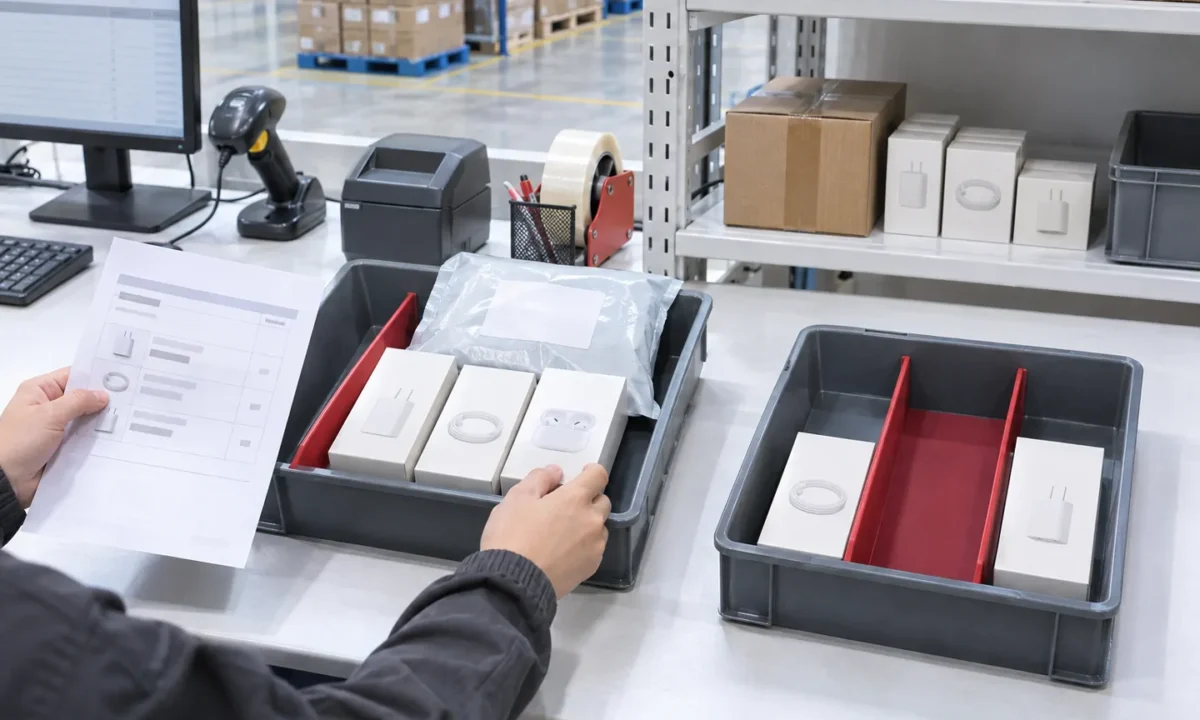
Quick summary: Partial order fulfillment means dispatching an approved portion of an order while leaving the remaining items open for later action. The key controls are explicit SKU quantities, a separate record for each dispatch, and a reconciled balance that cannot be accidentally shipped twice.
1. Why available inventory is not permission to split an order
One product is ready while another remains at the factory. Shipping the available units may serve the buyer's priorities, but it also creates a second packing and delivery event. A warehouse should not infer authorization from a deadline or from the fact that some stock is available.
This guide is for ecommerce operations teams and brands coordinating China-side fulfillment. Partial order fulfillment is different from simply placing one complete order into several cartons. It also differs from splitting a bulk stock transfer: customer-order references and customer communications must remain connected to the individual items being dispatched.
2. Define a partial order fulfillment release before picking
2.1 Approve the quantities and the commercial consequence
Confirm whether the customer or merchant permits a split, which items can leave, and what happens to the remainder. Record any additional handling, packaging and freight approval. If products form a kit or must be used together, check that shipping a component separately is acceptable before treating it as available stock.
Create a dispatch reference under the original order. Include SKU, variant, released quantity, destination, packing instruction and the person authorizing release. Exclude inventory on quality hold even when it is physically present. A promised supplier completion date is not proof that missing stock is ready to ship.
| Control field | First dispatch record | Remaining-order record |
|---|---|---|
| Original order | Same original reference | Same original reference |
| SKU and quantity | Exact units authorized now | Units still owed, not a copy of the original total |
| Inventory status | Accepted and allocated | Awaiting receipt, approval or another defined action |
| Packing and freight | Approved method and charges | Separate assumptions, not an implied free shipment |
| Tracking | Actual reference for this dispatch | Added only when the later dispatch is arranged |
| Decision owner | Person approving this release | Person reviewing delay, cancellation or next release |
2.2 Keep the system status narrower than the original order
Shopify's official individual-fulfillment guidance supports fulfilling selected items or quantities and adding tracking for a fulfillment. It also explains that manual fulfillment depends on the fulfillment setup; orders assigned to a third-party service have different status control. Review those conditions in the actual store before changing records.
Those platform capabilities do not establish that Oushine has a native Shopify connector, real-time stock sync or automatic split-order handling. Confirm the actual connection, permissions and update owner in the service scope. A controlled file-based pilot may use a release sheet and reconciliation record; an integrated workflow needs its own tested mapping and exception process.
3. Reconcile the balance and prevent duplicate dispatch
For each SKU, compare the approved order quantity with confirmed dispatches, authorized cancellations and the remaining open quantity. Keep allocation separate from physical dispatch so the same units are not counted as shipped while they are only waiting on a packing bench.
For illustration, an order for ten units with four confirmed dispatched and no cancellations has six units still open. A later instruction to ship those six must reference the earlier dispatch rather than import the original ten-unit order again. This is a hypothetical arithmetic example, not an actual Oushine client result.
Agree who sends customer updates, which items the update lists, and how it describes outstanding goods. Do not attach one tracking number to the whole order without checking what that shipment contains. If a buyer changes or cancels the remainder, record the approval and the effective cutoff before the next release.
Use the China fulfillment operating-model guide for the broader setup. Keep blocked units within the quality-hold inventory process and follow approved product packaging instructions for each dispatch. This article addresses release controls, not a promise of any software integration or delivery outcome.
4. Frequently asked questions
Is partial fulfillment the same as shipping a complete order in two boxes?
A: No. Partial fulfillment leaves some ordered items unfulfilled. A complete order can use multiple boxes while all ordered items leave in the same planned release. Maintain carton contents and tracking appropriate to each arrangement.
Can the remaining goods ship automatically when they arrive?
A: Only under an agreed authorization rule after required receiving, inspection, packing and freight conditions are satisfied. Arrival alone is not release approval; confirm the workflow and who updates the order record.
5. Conclusion and next action
Partial order fulfillment needs a clear boundary between what ships now and what remains open. Send Oushine your SKU quantities, supplier readiness, destination, packing requirements and split-shipment policy to request a written fulfillment scope. Confirm handling, freight, communication responsibilities and any system connection separately before execution.
Sources and boundaries — reviewed November 26, 2026: The release table and reconciliation checks are recommended operating practices. Shopify guidance describes platform behavior, not a verified Oushine integration.