
Golden Sample Approval in China: QC Reference Guide
Plan golden sample approval with versioned references, measurable tolerances and defect examples so China inspections follow your actual acceptance criteria.
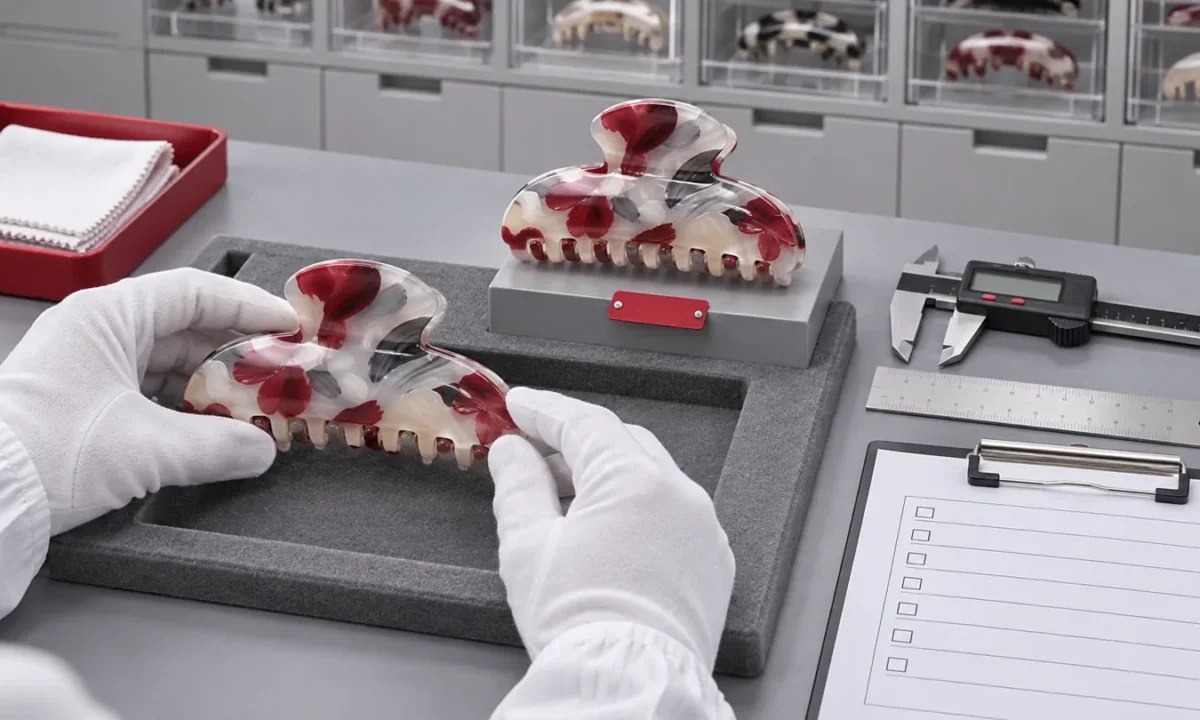
Quick summary: Golden sample approval identifies the physical product reference a customer authorizes for comparison during production or inspection. Pair that sample with written tolerances, defect examples and a defined inspection scope; a reference product alone does not establish how a whole batch will be accepted.
1. Why "match the sample" can be an incomplete QC instruction
Two inspectors can look at the same accessory and disagree about a paint variation or a slight surface mark. A buyer may care about the front face but accept minor variation on an unseen surface. Unless those distinctions are recorded, sending a perfect sample does not explain how borderline units should be classified.
Golden sample approval is useful for importers and brands buying products with visible finishes, dimensions, assembled components or hand-applied details. It establishes a comparison reference, not laboratory certification, regulatory approval or a guarantee that every delivered unit will match perfectly. The recommendations here must be adapted to the product and the customer's requirements.
2. Document a golden sample approval process
2.1 Identify the reference and the characteristics it controls
Assign a sample ID, product SKU, variant, approval date and approving customer representative. Record who holds each physical reference and use a corresponding photo set for identification. Describe whether the sample governs appearance, dimensions, assembly, packaging or another agreed characteristic.
Do not use the reference as a substitute for specifications that need measurement or specialist testing. Agree the measuring method, units, measurement points and permissible range before inspection. Photos should include useful angles and scale references, but lighting and screen differences can affect perceived color. State when a physical comparison is necessary.
| Inspection characteristic | Reference to agree before checking |
|---|---|
| Color or finish | Identified physical reference and viewing conditions |
| Dimensions | Drawing, measurement points and numerical tolerance |
| Hand-applied details | Examples showing acceptable natural variation |
| Visible defects | Photos and agreed severity classifications |
| Assembly or function | Specific checks and equipment, if applicable |
| Packaging | Approved pack specification and label version |
2.2 Separate the acceptance criteria from the sampling plan
Acceptance criteria describe what counts as a conforming unit for the checks performed. A sampling plan addresses how units are selected and how the inspection result informs a lot decision. They solve different questions and should be approved separately.
NIST explains that acceptance sampling supports a decision about whether a lot is acceptable, rather than estimating its quality. Its single-sampling discussion also distinguishes sample size from the acceptance decision threshold. Therefore, a golden sample does not determine an AQL plan or justify an arbitrary sample count. Agree the lot definition, selection method, sample quantity, defect classifications and decision rules with the responsible quality team. Specialist or destructive testing needs a separately defined scope.
3. Handle borderline units and reference changes explicitly
Use a short decision log when an inspector finds a characteristic not covered by the approved examples. Identify the affected quantity and evidence, obtain customer instruction, and retain the decision with the inspection record. Do not turn one exception approval into a permanent new tolerance without authorization.
For example, a buyer might accept a limited brushstroke variation while rejecting a missing component. The actual limits must come from that buyer's specification; neither the inspector nor this article can supply a universal allowable percentage. This is an illustrative distinction, not a real customer case.
Connect the reference set to the agreed China product inspection scope. Keep unresolved units in a documented quality-hold workflow rather than releasing them because shipment collection is approaching. If the customer approves a new label or package, link that decision to repackaging and labeling instructions without silently changing the product reference.
4. Frequently asked questions
Can photos replace a physical golden sample?
A: They may support identification and some visual checks, but may not resolve finish, texture, color or functional comparisons. Agree which characteristics require a physical reference, measurement or another test method.
Does golden sample approval mean the entire shipment passes QC?
A: No. It approves a reference. The shipment still needs the agreed inspection and lot decision; uninspected characteristics and units remain outside the evidence actually collected.
5. Conclusion and next action
Golden sample approval becomes actionable when the reference, tolerances, defect examples and inspection plan are clear. Send Oushine your SKU list, reference samples or photos, specifications, quantities and required checks to request a written inspection scope. Expanded checks, equipment and laboratory testing are assessed separately where needed; no inspection removes every product risk.
Sources and boundaries — reviewed November 25, 2026: Reference-sample handling above is recommended operational guidance. Sampling concepts are supported by: